Ruiting Machinery specializes in high-performance ceramic anilox roller cleaning solutions designed for flexographic printing operations. Our machines utilize advanced ultrasonic technology and dual-tank systems to ensure thorough cleaning while preserving roller integrity.
Applications & Cleaning Scenarios
Ceramic anilox rollers require specialized cleaning in various printing environments:
Flexographic Printing Shops: Remove dried ink, coating residues, and contaminants from ceramic surfaces
Label and Packaging Facilities: Maintain precise ink transfer capabilities for consistent print quality
Newspaper and Commercial Printing: Clean rollers used with water-based, UV, and solvent-based inks
Corrugated Box Manufacturing: Address heavy ink buildup from high-volume production runs
Featured Cleaning Machine Models
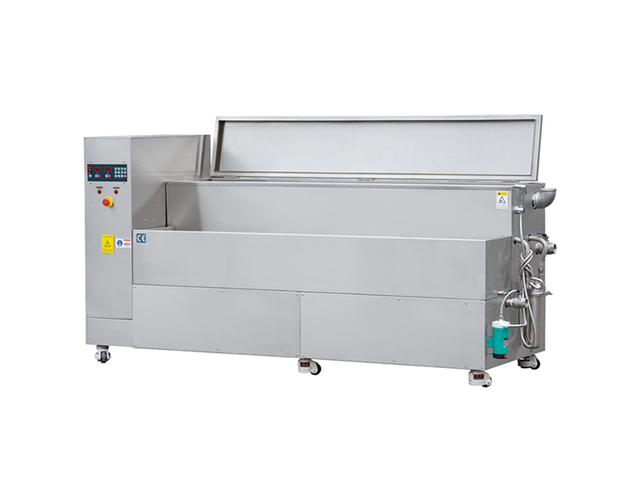
Double Slot Water Solvent Washing Machine (RTSC-650)
Our dual-tank system provides sequential solvent and water cleaning for comprehensive residue removal. Key features include:
650mm maximum roller capacity
Temperature control system (20°C-80°C)
Stainless steel construction with enhanced waterproofing
Roller swiveling mechanism for 360-degree cleaning
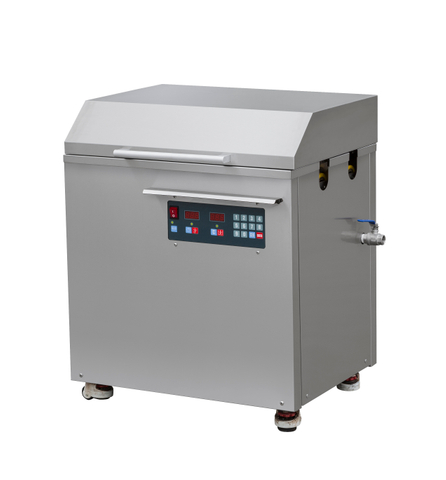
Ultrasonic Cleaning Machine (RTSC-320)
Advanced 40kHz ultrasonic technology delivers precision cleaning for delicate ceramic surfaces:
Digital touch control panel with real-time monitoring
Automatic drum rotation for complete coverage
Adjustable temperature up to 100°C
Industrial-grade transducers for stable operation
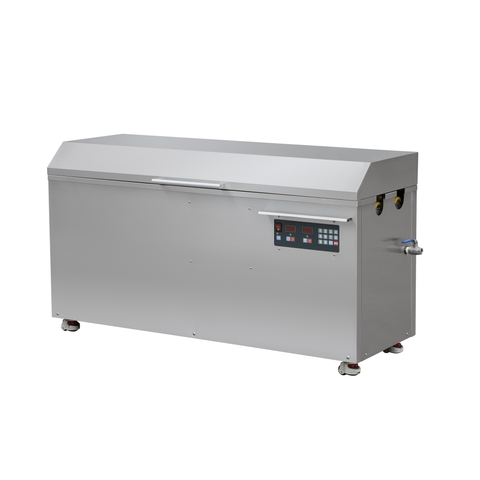
Horizontal Online Washing Machine (RTSC-1000)
Designed for inline printing equipment with specialized short-shaft cleaning capabilities:
1000mm roller length capacity
Environmentally friendly water-based solvent compatibility
Customizable solutions for multiple roller configurations
Alkaline and weak acid solvent compatibility
Frequently Asked Questions
What cleaning frequency is recommended for ceramic anilox rollers?
For optimal performance, clean ceramic anilox rollers after each production run or every 24-48 hours of continuous operation. Heavy ink applications may require more frequent cleaning.
Can these machines clean both ceramic and metal anilox rollers?
Yes, our cleaning machines are engineered to safely clean both ceramic-coated and metal anilox rollers without damaging the delicate ceramic surface or engraving.
What types of solvents are compatible with your cleaning systems?
Our machines support various solvents including water-based solutions, alkaline cleaners, weak acids, and specialized anilox cleaning chemicals. The dual-tank model allows for sequential solvent and water rinsing.
How does ultrasonic technology improve cleaning effectiveness?
Ultrasonic cleaning uses high-frequency sound waves to create microscopic bubbles that implode, dislodging contaminants from the smallest ceramic cells without abrasive contact.
What safety features are included in your cleaning machines?
All models feature emergency stop switches, leakage protection, temperature monitoring, and waterproof construction to ensure operator safety and equipment durability.