close
Choose Your Site
Global
Social Media
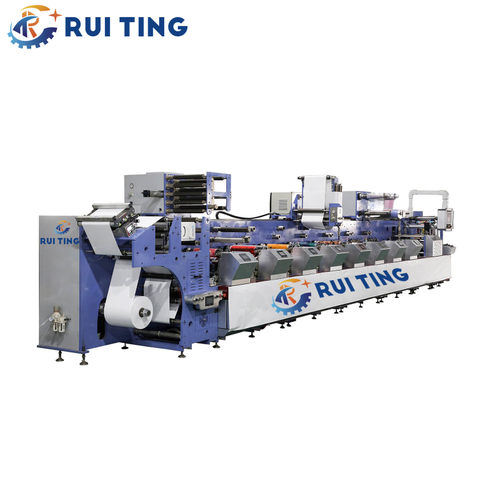
Flexographic printing machines, commonly known as flexo printers, are advanced printing solutions designed for high-speed, high-quality production across a wide range of materials. At Ruiting Machinery, our flexo printers excel in printing tickets, cardboard, high-end self-adhesive trademarks, and films with backing paper, offering unmatched efficiency and eco-friendly ink options. This section provides a detailed breakdown of the technology, features, and applications to help you optimize your printing operations.
Flexographic printing utilizes fluid inks with high fluidity. The process begins with the ink tank roller transferring ink to the anilox roller, which meters a controlled amount of ink onto the flexible photopolymer printing plate. The plate's image areas receive the ink, and the printing roller then applies pressure to transfer the ink onto the substrate (e.g., paper, film). Finally, the printed material passes through a drying system (e.g., UV, IR) to set the ink, ensuring smudge-free results.
Ruiting's flexo printers feature a straightforward design that minimizes complexity, reducing downtime and simplifying maintenance. This makes them ideal for operators with varying skill levels, as daily checks and cleaning can be performed quickly without specialized tools.
These machines achieve superior print quality on diverse materials—from delicate plastic films to rigid corrugated cardboard. The anilox roller's short ink path ensures consistent ink transfer, enabling sharp graphics on non-porous surfaces like PE and aluminum foil, as well as porous materials like kraft paper.
Flexo printing reduces overall production costs by up to 50% compared to gravure printing. Savings come from lower plate-making expenses, minimal paper waste (under 5% loss rate), and efficient ink usage. This makes it a budget-friendly choice for short to medium print runs.
With advanced anilox rollers and high-performance resin plates, our machines achieve dot reproduction of 1–95% and resolutions up to 300 lines per inch. This results in color-rich, offset-comparable prints, ideal for brand-sensitive applications like labels and packaging.
Plastic Films: PE, PET, OPP, OPE, and other flexible packaging materials.
Papers: Kraft paper, thermal paper, matte paper, and coated stocks.
Labels: Thermal labels, IML labels, water bottle labels, and self-adhesive variants.
Specialty Substrates: Aluminum foil for food packaging and non-woven fabrics for medical applications.
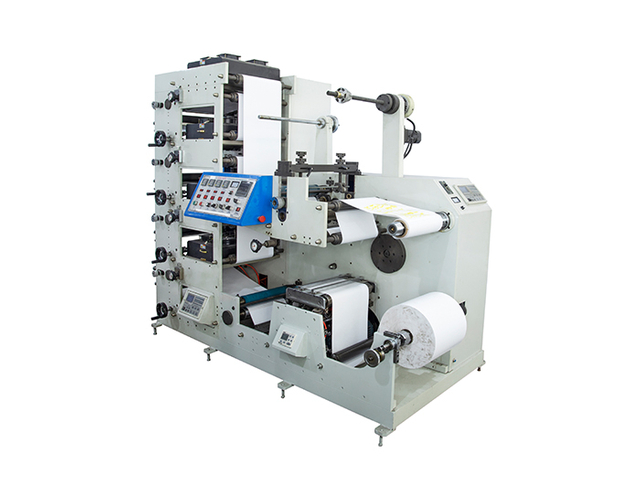
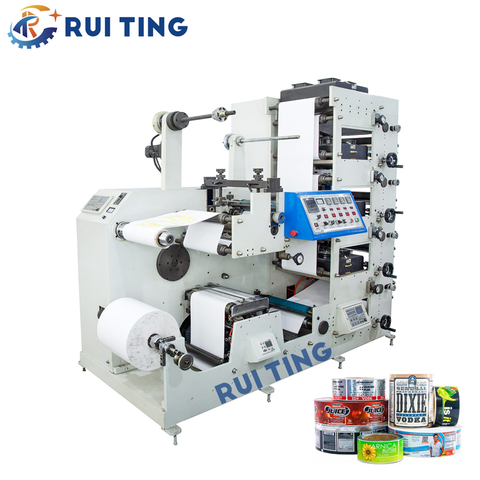
These models feature a vertical design where printing units are stacked, saving floor space. They are perfect for beginners or budget-conscious users printing common materials like labels and films. Key advantages include easy access for maintenance and lower initial investment.
Ideal for: Entry-level users, simple materials (e.g., paper tags), and sites with limited space.
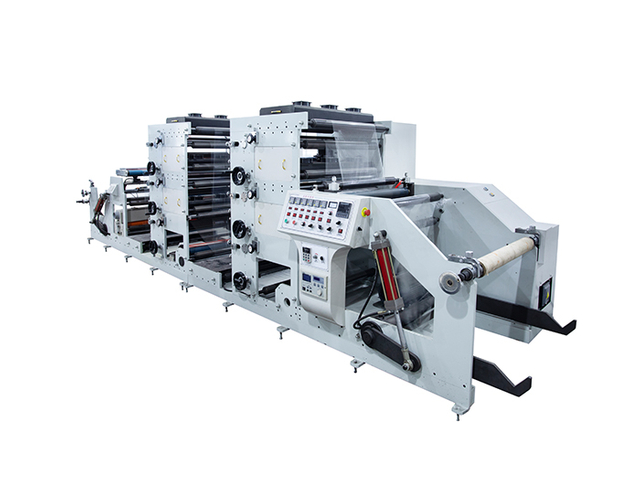
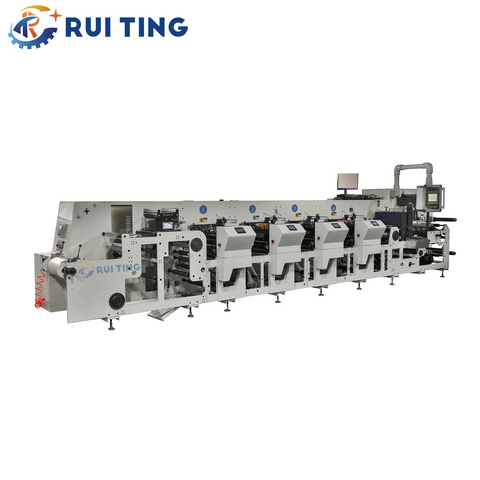
Inline machines arrange printing units horizontally for sequential processing, supporting complex jobs with higher speed and precision. They handle a broader material range and are suited for demanding applications like multi-color labels.
Ideal for: High-volume production, diverse materials (e.g., film labels), and operations requiring tight registration.
Select based on your production needs:
For stack machines: Choose if you're new to flexo printing, have a limited budget, work with standard materials (e.g., paper/film labels), and have space constraints.
For inline machines: Opt for these if you require high efficiency, versatility in substrates, and enhanced print quality for branded packaging.
Consult Ruiting’s team for a tailored solution—such as our 5-color UV-equipped model with inspection systems.
Pharmaceuticals: Printing dosage instructions on blister packs.
Food & Beverages: Creating vibrant labels for bottles and flexible packaging.
Cosmetics: High-gloss prints on perfume boxes and tube labels.
Consumer Electronics: Durable markings on product manuals and components.
Logistics: Barcodes and shipping labels for tracking.
Print Media: Newspapers, flyers, and commercial bills.


The flexographic printing market is projected to grow at a CAGR of 11.3% through 2026, driven by demand for sustainable packaging and versatility across substrates like plastics, paper, and metal films. Ruiting’s machines align with this trend, offering scalability for emerging industries.